


Market Reports
A market perspective on why hotel renovation projects can contain significant recoverable value in furniture, joinery, lighting, and coordinated room systems.
Hotels are renovated to protect guest experience, brand standards, and commercial performance. But renovation also creates a large flow of outgoing assets.
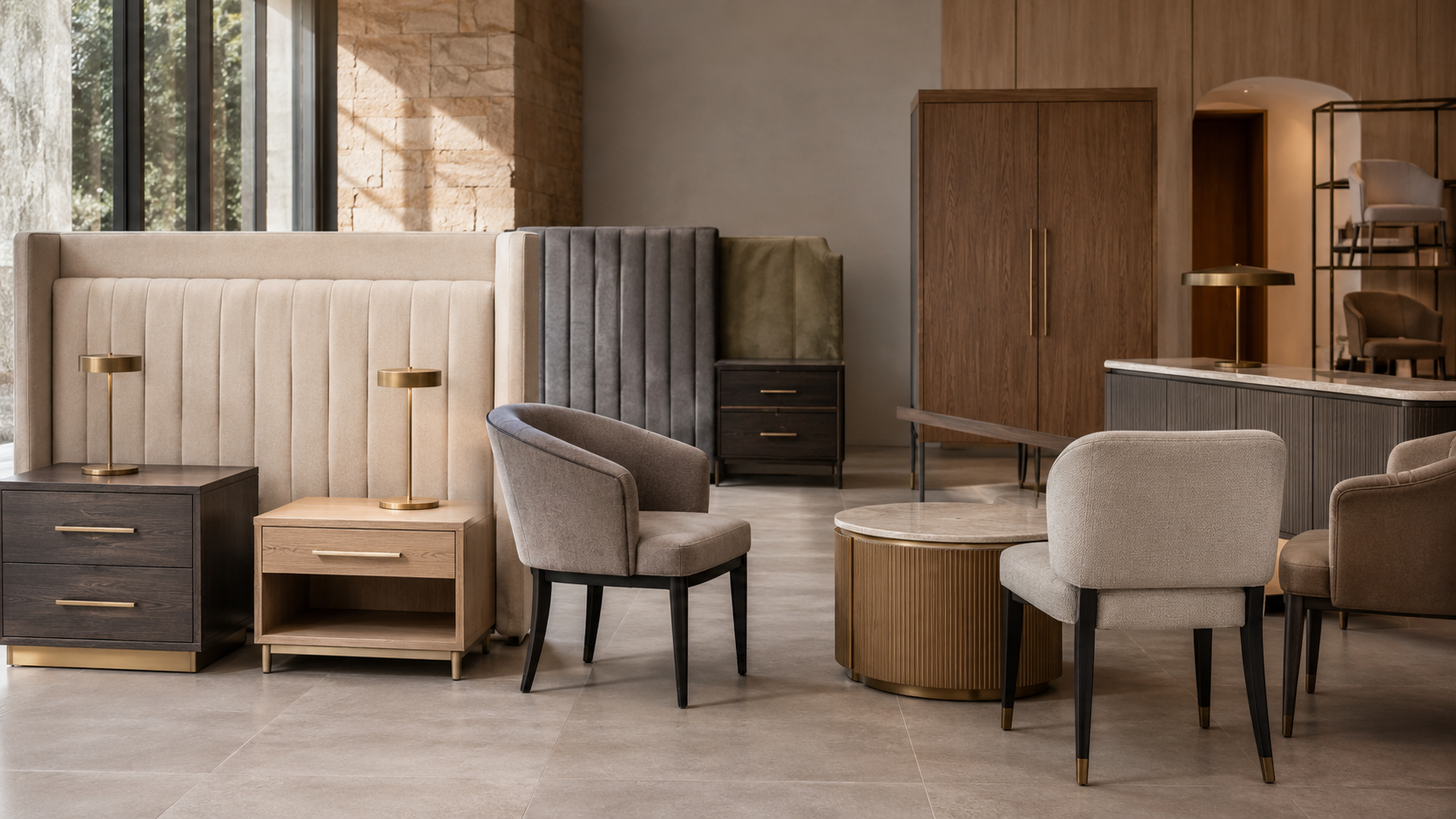
Guest rooms often contain coordinated furniture systems: headboards, beds, bedside tables, writing desks, mirrors, lighting, wardrobes, TV units, seating, decorative panels, and joinery. In many projects, these elements are removed quickly and treated as disposal.
That can mean significant retained value is missed.
Hospitality furniture is often built for durability. It may be heavier, stronger, and more coordinated than standard residential furniture. Even when the design is no longer suitable for the original hotel, the asset may still have value for other interiors.
The question is whether the items can be identified and prepared before they disappear into a disposal workflow.
A recovery process can reveal:
One of the strongest opportunities in hospitality recovery is scale. A single apartment renovation may produce a few usable items. A hotel renovation can produce hundreds of related assets from many rooms.
That scale matters to designers and procurement teams. It makes reuse more practical because multiple spaces can be fitted with a consistent material or furniture language.
This is especially relevant when assets were originally designed as part of a coherent room system.
Turning hotel furniture disposal into asset recovery requires a structured workflow.
The process should begin with a site visit and inventory review. Assets should be photographed, counted, categorized, and assessed for condition. Items with reuse potential should be separated from those that are damaged beyond practical recovery.
The goal is not to save everything. The goal is to identify what still has usable value.
When hospitality assets are documented clearly, they become easier to present to architects, designers, developers, and buyers. Instead of appearing as second-hand leftovers, they can be understood as a curated inventory.
This changes the market signal.
The asset is no longer just “used furniture.” It becomes a recoverable interior system with provenance, quantity, condition notes, and reuse potential.
For RERSUS, this is where hospitality renovation becomes more than a demolition event. It becomes a sourcing opportunity.