


Material Intelligence
A practical breakdown of the fields that turn a recovered asset from a visual claim into a credible project input.
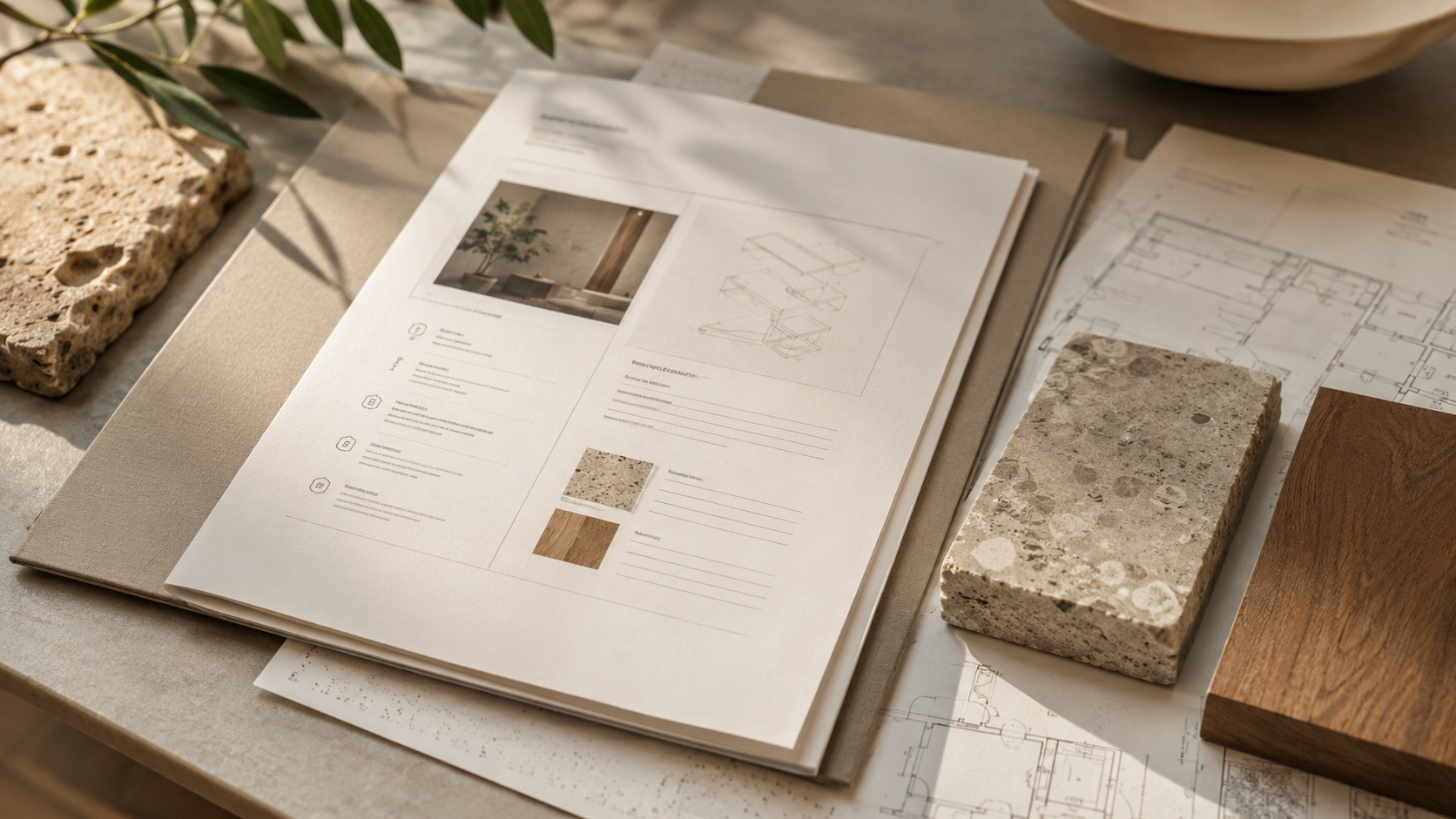
Recovered materials often have immediate visual appeal. A stone slab, carved timber panel, or set of hospitality furniture may clearly look valuable. But for architects, developers, procurement teams, and sustainability consultants, visual quality alone is not enough.
A recovered asset becomes useful when it can be understood, compared, specified, and documented. That is where the idea of a Material Passport becomes important.
A Material Passport is not simply a label. It is a structured record that helps explain what the asset is, where it came from, what condition it is in, and how it may be reused.
At a minimum, a useful Material Passport should identify the material or asset clearly. It should describe its type, dimensions, quantity, origin, condition, and potential reuse pathway.
For project teams, this information matters because it reduces uncertainty. A recovered item without documentation may still be attractive, but it is harder to approve, price, specify, or defend in a professional workflow.
Key fields often include:
Provenance is one of the most important parts of the record. It explains where the material came from and how it entered the recovery process.
This is especially important in premium projects. A developer or designer may need to explain not only that a material is reclaimed, but why it is credible, traceable, and suitable for reuse.
Without provenance, reuse remains a story. With provenance, it becomes part of a project’s evidence layer.
A Material Passport should also clarify condition. This does not mean every asset must be perfect. Some materials are suitable for direct reuse, while others may need cleaning, repair, refinishing, reupholstery, or technical review.
The important point is transparency. Project teams need to know what they are working with before they commit.
A clear condition summary can help separate three different cases:
A Material Passport does not replace professional specification, certification, or compliance review. But it can make recovered materials easier to evaluate and easier to introduce into formal project conversations.
For RERSUS, the purpose is simple: to move recovered assets from informal opportunity into a decision-ready format.
A material becomes more valuable when it can be trusted.